- Tomorrow's Fortune
- Posts
- Everything I Learned at CES 2026
Everything I Learned at CES 2026

Kenny Finance
January 13, 2026

In This Issue:
Top Investment Themes from CES 2026. Humanoid Robots, AI and more…
What We’re Watching: Japan’s Snap Elections, Proposed Cap on Credit Card Interest Rates and Data Center Impact on Consumer Energy Prices
Deal of the Week: We found a cash flowing Specialized Engineering Business in Texas ($266k of Cash Flow). Click HERE for the listing (Deal Review Below)
🚀 The Deal Team Applications 🚀
Our community for investors & business buyers is launching this month! Applications go live this Friday - stay on the lookout. Limited spots!
Key Takeaways from CES 2026
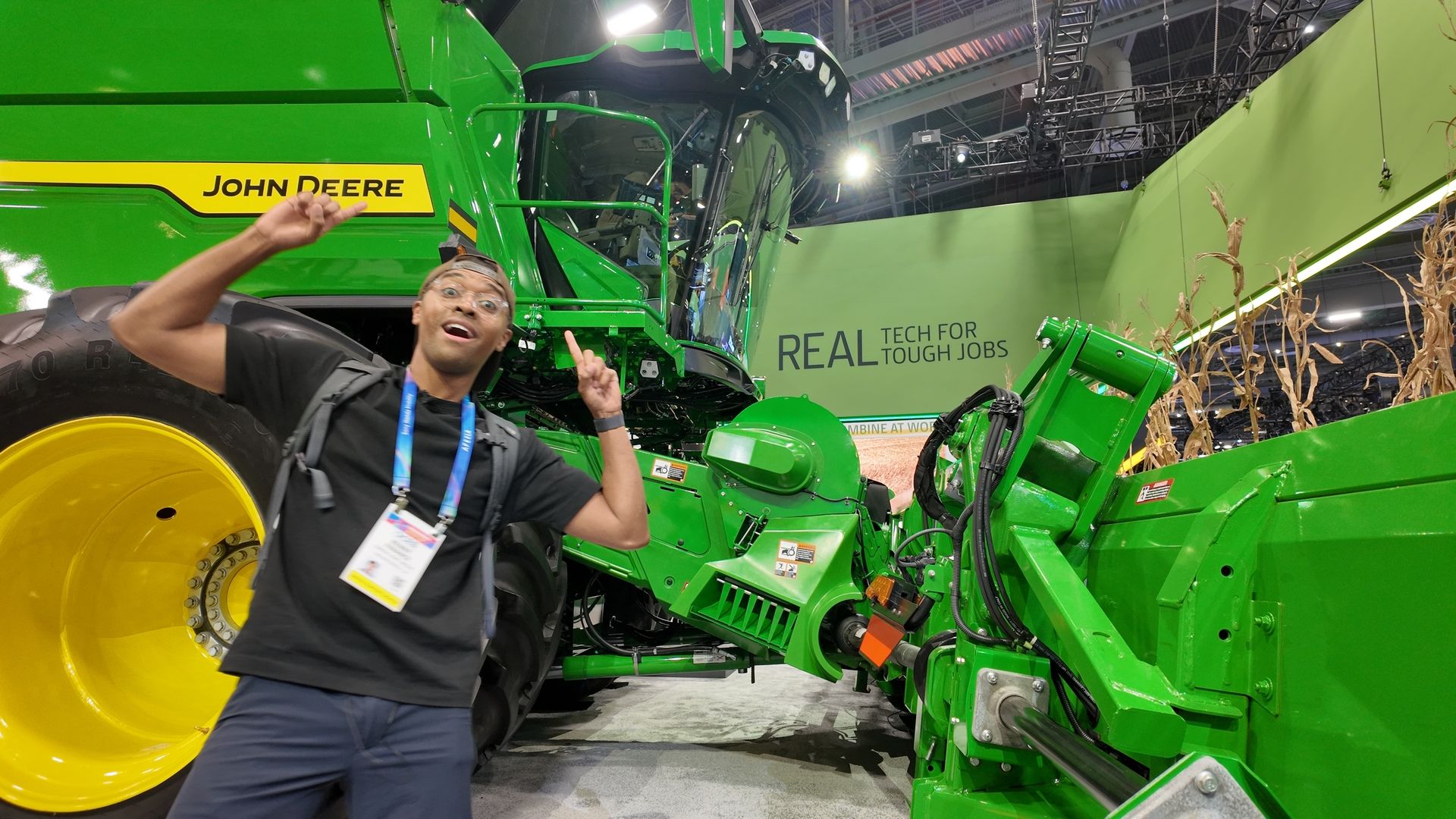
s/o to John Deere’s Robotic Machines!
The floor is full of demos. The real opportunities are in what makes the demos possible.
Memory is the AI bottleneck—and it's not easing
Everyone talks compute. Fewer talk memory. But data access speed is the constraint right now, likely for the next 3–6 months minimum. Micron, Western Digital, SanDisk, and AData are quietly shifting production toward enterprise and data center demand. Not sexy. Critical.
AgBotics has clear ROI
Robotics in agriculture isn't speculative—it's already delivering time savings. Farmers who spent 6+ hours daily on repetitive routes now deploy autonomous fleets and reclaim that time for higher-value work. John Deere is the clear category winner. This is infrastructure automation with a business case, not a consumer gadget play.
Humanoid robotics: 2–3 real players, thousands of clones
Tesla, Figure, Agibot—maybe a handful of serious contenders. Beyond that? Lookalikes with no differentiation. Many demos were joystick-controlled toys dressed up as autonomy. The gap between stage presence and deployable reality remains massive. Atlas was the most technically impressive, but we're still years from solving consumer adoption, privacy, regulation, and clear value propositions.
Autonomous vehicles are crossing into reality
Zoox was competing with Uber drivers on the Vegas strip. Waymo's fleet scale is expanding. Nvidia's new models paired with Mercedes, Uber, and Lucid partnerships signal this isn't theoretical anymore. The tech works, infrastructure is being built, and fleet rollout feels realistic in 12–24 months. Safer than human drivers. Economically viable at scale.
The real wins are boring infrastructure
Cooling systems. Power delivery. Memory architecture. Networking. Maintenance. None of this gets keynote time, but it's where the money gets made. AI doesn't just need software innovation—it forces massive physical buildout. Own the infrastructure that every innovation depends on.
Best idea from the floor: Digital twins + LiDAR mapping
Several exhibitors focused on digital twinning and LiDAR mapping for construction projects, buildings, and utility infrastructure. This creates sticky, recurring value for utilities and developers who need better visibility and monitoring of assets. Boring businesses solving expensive problems for customers with long time horizons—exactly where value hides.
WHAT’S HAPPENING IN THE MARKETS?
Prime Minister Takaichi's LDP is calling a snap election in February—just four months into her term—to capitalize on high approval ratings before they erode.
Why it matters: A decisive win accelerates defense spending, fiscal stimulus, and corporate governance reforms. Watch the yen and Japanese equities. The real question: is this confidence or desperation? Political capital spent now can't be spent on harder policy battles later.
Trump's 10% Credit Card Rate Cap
Trump proposed capping credit card rates at 10%. Banks will tighten underwriting, cut rewards programs, and exit subprime. The unintended winner: private credit lenders stepping in at higher rates through personal loans and BNPL.
Why it matters: This doesn't make risky borrowers safer—it makes them unprofitable to serve. Credit access contracts, consumer spending dips, and ABS spreads widen. Marginal borrowers shift to more expensive alternatives. Trade: long private consumer credit, short card ABS. The 2% cashback card dies first.
Microsoft's Data Center Power Play
Microsoft will pay premium rates to utilities to ensure local electricity bills don't spike where it builds data centers.
Why it matters: This is regulatory arbitrage—overpay on power to avoid permitting delays. When companies volunteer to pay more, the constraint is real. Power access is becoming a competitive moat. Hyperscalers lock up capacity; smaller AI players get priced out. Winners: utilities with expansion capacity in AI-friendly states.
DEAL OF THE WEEK
Coalescing Plate Separator Engineering Firm
Price: $750K | SDE: $266K | Multiple: 2.8×
Investment Summary
24-year engineering firm designing coalescing plate oil-water separators for industrial, municipal, and commercial clients across North America. Revenue of $642K with 41% margins. Asset-light, home-based, and fully relocatable.
This is environmental compliance infrastructure sold into non-discretionary budgets. Customers don't buy these systems because they want to—they buy them because regulators, insurers, and EPA mandates require them.
Financials & Structure
Revenue: $642K
SDE: $266K (41% margin)
Home-based, minimal overhead
Manufacturing and installation outsourced (capital-light model)
Customers: Municipal stormwater, vehicle/aircraft maintenance, oil & gas, power generation, industrial facilities
Investment Thesis
This is a specification sale, not a commodity bid. Coalescing plate technology outperforms API separators, swirl devices, and tube separators on efficiency and cost. It's the proven middle ground—better than low-end alternatives, far cheaper than high-end DAF/IAF systems that only pencil in narrow use cases.
The business lives in a technical niche with real barriers: sizing separators requires engineering judgment (flow rates, droplet density, temperature parameters). Buyers need a reliable partner who gets it right the first time—because retrofitting after installation is expensive and embarrassing.
Retiring owner, zero active sales or marketing. Growth comes from repeat customers, referrals, and a concrete vault partner. The website and technical papers generate inbound leads passively. This is pure latent capacity—the infrastructure to scale exists, but no one's pushing the flywheel.
Key Strengths
Non-discretionary, compliance-driven demand (EPA, municipal codes, industrial permits)
Asset-light: no manufacturing, no inventory, no facilities beyond home office
Technical moat: sizing and specification knowledge isn't easily replicated
Sticky customer base: municipalities and industrial facilities are repeat buyers with long replacement cycles
Relocatable: can operate from anywhere
Critical Diligence
Customer concentration: Top 5 customers = what % of revenue? Any municipality or industrial contracts at risk?
Supplier lock-in: Who manufactures? Alternative sources available?
Technical handoff: Can sizing calculations and engineering specs be systematized or do they live in the owner's head?
Pipeline visibility: How much business comes from the concrete vault partner vs. direct? Is that relationship contractual or informal?
Regulatory tailwinds: Are EPA stormwater rules tightening (they are)? Does that create pull-through demand?
Bottom Line
This is engineering IP wrapped in a compliance sale. Priced like a solo consulting practice. Scales like a product business. Add a sales function, refresh the web presence, formalize partnerships—suddenly $266K in owner earnings becomes the floor, not the ceiling.
This newsletter is for informational purposes only and does not constitute investment advice. The content is based on publicly available information, and the author makes no representations about its accuracy or completeness. Readers should conduct their own research before making any investment decisions.